What happens when a man is forced into a marriage he never wanted, while the woman standing beside him enters the household with intentions far darker than anyone could imagine?
In DAN HAKIN DAKA RAINA, marriage is not simply about companionship. It becomes a battlefield where obedience, poverty, jealousy, family pressure, patience, and hidden intentions collide. Alhaji Mudan finds himself trapped between his mother's demand that he marry Balaraba and his responsibility toward the family he is already struggling to support. What begins as an unwanted marriage soon exposes a much more dangerous problem when Balaraba and Fauxiyya seek help from a mysterious man known as Nakan Tsauni.
But there is more at stake than a troubled marriage. Behind the arguments, poverty, family conflicts, and seemingly ordinary household struggles lies a growing secret involving jealousy, spiritual manipulation, and a plan that could threaten an entire family.
Summary
The story opens in a humble household during a threatening rainstorm. Rabi'atu, a heavily pregnant woman, is busy struggling with the responsibilities of the home while caring for Hapsatu and trying to survive despite their difficult financial circumstances. Her husband, Alhaji Mudan, is under enormous pressure from his mother, Kaka Hajjah, who insists that he must marry another woman. Mudan is deeply uncomfortable with the idea because he knows he can barely provide for the family he already has. His hesitation, however, does little to stop the people around him from pushing the marriage forward.
Rabi'atu understands the difficult position her husband is in and encourages him to obey his mother, believing that patience and acceptance of destiny may eventually bring something good. Their household has very little, yet there is a strong sense of cooperation between Rabi'atu, Hapsatu, and Mudan. Hapsatu is particularly important to the family because she is still pursuing her education while helping her mother with domestic responsibilities. The family struggles with poverty, but their faith, affection, and willingness to sacrifice for one another keep them together.
The arrival of Balaraba changes the atmosphere completely. Instead of entering the household peacefully, she arrives with a strong desire to control her new husband and the home around him. Her jealousy toward Rabi'atu quickly becomes obvious, and Fauxiyya, her daughter, encourages her hostility. Balaraba becomes increasingly frustrated when Mudan refuses to behave as she expects. Her resentment eventually drives her toward a dangerous decision. She seeks the help of Nakan Tsauni, a mysterious figure who proposes a frightening plan designed to make Mudan and his family vulnerable to her influence.
Meanwhile, life inside the household continues to develop in unexpected ways. Rabi'atu gives birth to a baby boy, Abubakar, bringing happiness to the family at a moment when Balaraba is desperately searching for a way to destroy the peace she sees around her. Hapsatu continues her education while helping her mother, and the family gradually begins improving their circumstances through hard work, small business opportunities, and mutual support. Their situation demonstrates that poverty does not necessarily destroy a family when there is patience, faith, and genuine care among its members.
However, Balaraba's secret activities create a much darker direction for the story. Her visit to Nakan Tsauni introduces the possibility of a supernatural threat against people who have done little more than become obstacles to her desires. What she is instructed to do is not merely an act of jealousy. It is an attempt to gain control over the family through manipulation and spiritual means. As the story progresses, the real meaning behind the title begins to take shape, because the consequences of looking down on others, mistreating people, and allowing resentment to control one's actions may eventually return to the person who caused the harm.
Genre
DAN HAKIN DAKA RAINA combines several elements that make it particularly engaging for readers of Hausa family and domestic fiction. It contains family drama, marriage conflict, psychological tension, jealousy, suspense, religious themes, poverty and survival, domestic rivalry, and elements of supernatural intrigue.
The novel does not rely on romance alone. Much of its tension comes from the relationships between husbands and wives, parents and children, co-wives, and members of an extended family. The story also introduces a darker suspense element through Balaraba's interaction with Nakan Tsauni, creating a sharp contrast between the ordinary struggles of the household and the hidden danger developing behind the scenes.
Setting
The story is largely centered around a modest family home where everyday life is shaped by financial hardship, domestic responsibilities, marriage, education, worship, and community relationships.
The household itself becomes one of the most important settings in the novel. The cooking area, rooms, compound, and surrounding neighborhood provide the stage for family conversations, arguments, celebrations, and moments of emotional tension. The atmosphere feels grounded in everyday Northern Nigerian life, where family reputation, parental authority, marriage expectations, religious practice, and community opinion can have a powerful influence on personal decisions.
The story also moves beyond the home into places such as the market, school, mosque, and other parts of the community. One particularly significant setting is the location associated with Nakan Tsauni, which introduces a darker and more mysterious atmosphere into an otherwise realistic domestic world.
Core Themes
Family Responsibility
One of the strongest themes is responsibility. Alhaji Mudan is expected to provide for his family even when his financial situation makes that extremely difficult. His dilemma shows how family expectations can become overwhelming when a person is already struggling to meet existing responsibilities.
Marriage and Obedience
Marriage is presented as something influenced not only by the couple involved but also by parents and extended family members. Mudan's conflict with his mother's wishes raises questions about obedience, personal choice, responsibility, and the consequences of entering a marriage without genuine willingness.
Poverty and Survival
Rabi'atu's household lives with limited resources, but poverty does not completely define them. The characters constantly search for ways to improve their situation. Small businesses, education, tailoring, domestic work, and other forms of labor become symbols of their determination to survive.
Jealousy and Rivalry
Balaraba's jealousy is one of the major forces driving the conflict. Her inability to accept the existing family structure gradually changes her behavior and pushes her toward increasingly dangerous decisions. The novel explores how jealousy can begin as an emotion but become destructive when it is allowed to control a person's actions.
Faith and Patience
Rabi'atu repeatedly responds to hardship through patience, prayer, and trust in Allah. Her character represents the belief that difficult circumstances do not necessarily mean that a person's future is hopeless.
The Consequences of Actions
The story also examines the idea that actions eventually carry consequences. Characters make decisions based on anger, desperation, jealousy, obedience, or compassion, and those decisions shape what happens next.
Education and Hope
Hapsatu's education represents another important theme. Despite living in difficult circumstances, she continues attending school and preparing for her future. Her determination shows that difficult family circumstances do not have to destroy a young person's ambitions.
Key Characters
Alhaji Mudan
Alhaji Mudan is caught between family expectations and his own understanding of responsibility. He does not want to enter a marriage he believes he cannot financially sustain, yet he faces intense pressure from his mother. His character is shaped by hesitation, responsibility, patience, and his desire to avoid creating additional hardship for his existing family.
Rabi'atu
Rabi'atu is one of the emotional foundations of the household. She is patient, hardworking, religious, and deeply concerned about her family. Despite poverty and the pressure surrounding her husband's second marriage, she does not immediately respond with hatred. Her willingness to encourage Mudan to obey his mother reveals a character who places family stability above personal comfort.
Hapsatu
Hapsatu is a young woman whose education and responsibilities place her at the center of the family's hopes for a better future. She assists her mother with domestic work while continuing her studies. Her relationship with Rabi'atu gives the story some of its warmest family moments, while her presence also makes her vulnerable to the consequences of the conflict surrounding the household.
Balaraba
Balaraba is one of the novel's primary sources of conflict. She enters the marriage with expectations that are quickly challenged by Mudan's existing family structure. Her jealousy toward Rabi'atu grows into resentment, and her determination to gain control eventually leads her toward dangerous decisions.
Fauxiyya
Fauxiyya supports her mother Balaraba and encourages her during moments of anger and frustration. Her attitude toward Rabi'atu's family demonstrates how hostility can spread from one person to another, particularly when resentment is repeatedly reinforced.
Kaka Hajjah
Kaka Hajjah represents the power of parental influence over marriage decisions. Her insistence that Mudan marry again creates the central conflict that eventually brings Balaraba into the household.
Abban Hapsatu
Abban Hapsatu is a supportive figure within the family. His actions toward Rabi'atu and Hapsatu demonstrate kindness, responsibility, and a willingness to contribute to the family's welfare.
Nakan Tsauni
Nakan Tsauni introduces the novel's darker element. His presence changes the nature of Balaraba's conflict from ordinary marital jealousy into something much more dangerous. He becomes connected to the secret plans Balaraba hopes will give her control over the people she considers obstacles.
Analytics and Insight
From a storytelling perspective, DAN HAKIN DAKA RAINA is built around escalating conflict. It begins with a relatively familiar domestic problem, a man being pressured into another marriage despite financial difficulties. As the characters settle into their new circumstances, the conflict gradually becomes more complicated.
The strongest part of the narrative is the contrast between Rabi'atu and Balaraba. Rabi'atu responds to hardship with patience, work, faith, and sacrifice, while Balaraba increasingly responds to frustration through jealousy and confrontation. This contrast gives the reader two very different approaches to suffering and disappointment.
Hapsatu also provides an important secondary storyline. Her education, relationship with her mother, and involvement in the family's daily struggles give the novel a sense of continuity between generations. Her character represents a future that the family is trying to protect despite the problems surrounding them.
The introduction of Nakan Tsauni significantly raises the suspense level. Until that point, the conflict can largely be understood as a domestic and marital struggle. His involvement creates uncertainty about how far Balaraba is prepared to go and what consequences her decisions may have for Mudan, Rabi'atu, Hapsatu, and the newborn child.
The story also uses everyday details effectively. Cooking, school, prayer, market activities, household repairs, business, childbirth, and family conversations make the characters feel connected to ordinary life. These familiar details make the darker developments more disturbing because the danger emerges inside an environment that initially feels normal.
What Makes the Novel Interesting?
The novel's appeal comes from the fact that its central conflict is not immediately resolved. The marriage happens, but the marriage itself does not solve the problem. Instead, it creates new tensions.
Readers are also given several questions to carry with them. Will Balaraba eventually accept her position in the household? Can Mudan protect his family while satisfying the demands of his mother? Will Rabi'atu's patience continue to hold the family together? What will happen to Hapsatu as the conflict becomes more dangerous? And most importantly, how far will Balaraba go in her attempt to achieve what she wants?
These unanswered questions give the story its suspense and encourage readers to continue beyond the opening chapters.
An Original Thematic Quote
“A heart that turns jealousy into a weapon may forget that every weapon eventually leaves a wound.”
This line captures the central warning of the story without revealing its later events. The novel asks readers to consider what happens when disappointment is allowed to become hatred and when a desire for control becomes stronger than compassion.
Final Reader's Perspective
DAN HAKIN DAKA RAINA is more than a story about a second marriage. It is a layered family drama about what happens when poverty meets family pressure, when patience is tested by jealousy, and when ordinary household disagreements begin to develop into something far more dangerous.
At its heart, the story presents two opposing paths. One is built around patience, faith, hard work, and acceptance of difficult circumstances. The other is driven by resentment, competition, and the desire to control people and situations.
For readers who enjoy Hausa novels filled with family drama, marriage tension, emotional conflict, suspense, jealousy, religious values, domestic rivalry, and mysterious developments, this story offers plenty to explore.
The deeper question is not simply who will win the struggle inside the household. It is whether the choices made by the characters will eventually bring them the peace they seek or return to them as consequences they never expected.






![<? $row['name']; ?>](https://hausanovels.edujects.com/Public/thumb/225x325/ebook/2026/01/thumb-696268211478.webp)
![<? $row['name']; ?>](https://hausanovels.edujects.com/Public/thumb/225x325/ebook/2026/01/thumb-215712317518.webp)
![<? $row['name']; ?>](https://hausanovels.edujects.com/Public/thumb/225x325/ebook/2026/01/thumb-310661014079.webp)
![<? $row['name']; ?>](https://hausanovels.edujects.com/Public/thumb/225x325/ebook/2026/01/thumb-718396567317.webp)
![<? $row['name']; ?>](https://hausanovels.edujects.com/Public/thumb/225x325/ebook/2026/01/thumb-679720274629.webp)
![<? $row['name']; ?>](https://hausanovels.edujects.com/Public/thumb/225x325/ebook/2026/01/thumb-977849158452.webp)
![<? $row['name']; ?>](https://hausanovels.edujects.com/Public/thumb/225x325/ebook/2026/01/thumb-671427641031.webp)
![<? $row['name']; ?>](https://hausanovels.edujects.com/Public/thumb/225x325/ebook/2026/01/thumb-162148377183.webp)
![<? $row['name']; ?>](https://hausanovels.edujects.com/Public/thumb/225x325/ebook/2026/01/thumb-620095653013.webp)
![<? $row['name']; ?>](https://hausanovels.edujects.com/Public/thumb/225x325/ebook/2026/01/thumb-537373635516.webp)
![<? $row['name']; ?>](https://hausanovels.edujects.com/Public/thumb/225x325/ebook/2026/01/thumb-488913675831.webp)
![<? $row['name']; ?>](https://hausanovels.edujects.com/Public/thumb/225x325/ebook/2026/01/thumb-971495158370.webp)
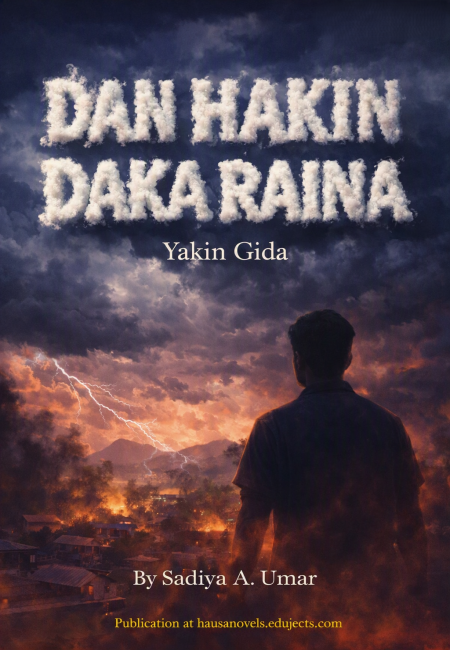
DAN HAKIN DAKA RAINA
By Sadiya A. Umar
Hook
What happens when a man is forced into a marriage he never wanted, while the woman standing beside him enters the household with intentions far darker than anyone could imagine?
In DAN HAKIN DAKA RAINA, marriage is not simply about companionship. It becomes a battlefield where obedience, poverty, jealousy, family pressure, patience, and hidden intentions collide. Alhaji Mudan finds himself trapped between his mother's demand that he marry Balaraba and his responsibility toward the family he is already struggling to support. What begins as an unwanted marriage soon exposes a much more dangerous problem when Balaraba and Fauxiyya seek help from a mysterious man known as Nakan Tsauni.
But there is more at stake than a troubled marriage. Behind the arguments, poverty, family conflicts, and seemingly ordinary household struggles lies a growing secret involving jealousy, spiritual manipulation, and a plan that could threaten an entire family.
Summary
The story opens in a humble household during a threatening rainstorm. Rabi'atu, a heavily pregnant woman, is busy struggling with the responsibilities of the home while caring for Hapsatu and trying to survive despite their difficult financial circumstances. Her husband, Alhaji Mudan, is under enormous pressure from his mother, Kaka Hajjah, who insists that he must marry another woman. Mudan is deeply uncomfortable with the idea because he knows he can barely provide for the family he already has. His hesitation, however, does little to stop the people around him from pushing the marriage forward.
Rabi'atu understands the difficult position her husband is in and encourages him to obey his mother, believing that patience and acceptance of destiny may eventually bring something good. Their household has very little, yet there is a strong sense of cooperation between Rabi'atu, Hapsatu, and Mudan. Hapsatu is particularly important to the family because she is still pursuing her education while helping her mother with domestic responsibilities. The family struggles with poverty, but their faith, affection, and willingness to sacrifice for one another keep them together.
The arrival of Balaraba changes the atmosphere completely. Instead of entering the household peacefully, she arrives with a strong desire to control her new husband and the home around him. Her jealousy toward Rabi'atu quickly becomes obvious, and Fauxiyya, her daughter, encourages her hostility. Balaraba becomes increasingly frustrated when Mudan refuses to behave as she expects. Her resentment eventually drives her toward a dangerous decision. She seeks the help of Nakan Tsauni, a mysterious figure who proposes a frightening plan designed to make Mudan and his family vulnerable to her influence.
Meanwhile, life inside the household continues to develop in unexpected ways. Rabi'atu gives birth to a baby boy, Abubakar, bringing happiness to the family at a moment when Balaraba is desperately searching for a way to destroy the peace she sees around her. Hapsatu continues her education while helping her mother, and the family gradually begins improving their circumstances through hard work, small business opportunities, and mutual support. Their situation demonstrates that poverty does not necessarily destroy a family when there is patience, faith, and genuine care among its members.
However, Balaraba's secret activities create a much darker direction for the story. Her visit to Nakan Tsauni introduces the possibility of a supernatural threat against people who have done little more than become obstacles to her desires. What she is instructed to do is not merely an act of jealousy. It is an attempt to gain control over the family through manipulation and spiritual means. As the story progresses, the real meaning behind the title begins to take shape, because the consequences of looking down on others, mistreating people, and allowing resentment to control one's actions may eventually return to the person who caused the harm.
Genre
DAN HAKIN DAKA RAINA combines several elements that make it particularly engaging for readers of Hausa family and domestic fiction. It contains family drama, marriage conflict, psychological tension, jealousy, suspense, religious themes, poverty and survival, domestic rivalry, and elements of supernatural intrigue.
The novel does not rely on romance alone. Much of its tension comes from the relationships between husbands and wives, parents and children, co-wives, and members of an extended family. The story also introduces a darker suspense element through Balaraba's interaction with Nakan Tsauni, creating a sharp contrast between the ordinary struggles of the household and the hidden danger developing behind the scenes.
Setting
The story is largely centered around a modest family home where everyday life is shaped by financial hardship, domestic responsibilities, marriage, education, worship, and community relationships.
The household itself becomes one of the most important settings in the novel. The cooking area, rooms, compound, and surrounding neighborhood provide the stage for family conversations, arguments, celebrations, and moments of emotional tension. The atmosphere feels grounded in everyday Northern Nigerian life, where family reputation, parental authority, marriage expectations, religious practice, and community opinion can have a powerful influence on personal decisions.
The story also moves beyond the home into places such as the market, school, mosque, and other parts of the community. One particularly significant setting is the location associated with Nakan Tsauni, which introduces a darker and more mysterious atmosphere into an otherwise realistic domestic world.
Core Themes
Family Responsibility
One of the strongest themes is responsibility. Alhaji Mudan is expected to provide for his family even when his financial situation makes that extremely difficult. His dilemma shows how family expectations can become overwhelming when a person is already struggling to meet existing responsibilities.
Marriage and Obedience
Marriage is presented as something influenced not only by the couple involved but also by parents and extended family members. Mudan's conflict with his mother's wishes raises questions about obedience, personal choice, responsibility, and the consequences of entering a marriage without genuine willingness.
Poverty and Survival
Rabi'atu's household lives with limited resources, but poverty does not completely define them. The characters constantly search for ways to improve their situation. Small businesses, education, tailoring, domestic work, and other forms of labor become symbols of their determination to survive.
Jealousy and Rivalry
Balaraba's jealousy is one of the major forces driving the conflict. Her inability to accept the existing family structure gradually changes her behavior and pushes her toward increasingly dangerous decisions. The novel explores how jealousy can begin as an emotion but become destructive when it is allowed to control a person's actions.
Faith and Patience
Rabi'atu repeatedly responds to hardship through patience, prayer, and trust in Allah. Her character represents the belief that difficult circumstances do not necessarily mean that a person's future is hopeless.
The Consequences of Actions
The story also examines the idea that actions eventually carry consequences. Characters make decisions based on anger, desperation, jealousy, obedience, or compassion, and those decisions shape what happens next.
Education and Hope
Hapsatu's education represents another important theme. Despite living in difficult circumstances, she continues attending school and preparing for her future. Her determination shows that difficult family circumstances do not have to destroy a young person's ambitions.
Key Characters
Alhaji Mudan
Alhaji Mudan is caught between family expectations and his own understanding of responsibility. He does not want to enter a marriage he believes he cannot financially sustain, yet he faces intense pressure from his mother. His character is shaped by hesitation, responsibility, patience, and his desire to avoid creating additional hardship for his existing family.
Rabi'atu
Rabi'atu is one of the emotional foundations of the household. She is patient, hardworking, religious, and deeply concerned about her family. Despite poverty and the pressure surrounding her husband's second marriage, she does not immediately respond with hatred. Her willingness to encourage Mudan to obey his mother reveals a character who places family stability above personal comfort.
Hapsatu
Hapsatu is a young woman whose education and responsibilities place her at the center of the family's hopes for a better future. She assists her mother with domestic work while continuing her studies. Her relationship with Rabi'atu gives the story some of its warmest family moments, while her presence also makes her vulnerable to the consequences of the conflict surrounding the household.
Balaraba
Balaraba is one of the novel's primary sources of conflict. She enters the marriage with expectations that are quickly challenged by Mudan's existing family structure. Her jealousy toward Rabi'atu grows into resentment, and her determination to gain control eventually leads her toward dangerous decisions.
Fauxiyya
Fauxiyya supports her mother Balaraba and encourages her during moments of anger and frustration. Her attitude toward Rabi'atu's family demonstrates how hostility can spread from one person to another, particularly when resentment is repeatedly reinforced.
Kaka Hajjah
Kaka Hajjah represents the power of parental influence over marriage decisions. Her insistence that Mudan marry again creates the central conflict that eventually brings Balaraba into the household.
Abban Hapsatu
Abban Hapsatu is a supportive figure within the family. His actions toward Rabi'atu and Hapsatu demonstrate kindness, responsibility, and a willingness to contribute to the family's welfare.
Nakan Tsauni
Nakan Tsauni introduces the novel's darker element. His presence changes the nature of Balaraba's conflict from ordinary marital jealousy into something much more dangerous. He becomes connected to the secret plans Balaraba hopes will give her control over the people she considers obstacles.
Analytics and Insight
From a storytelling perspective, DAN HAKIN DAKA RAINA is built around escalating conflict. It begins with a relatively familiar domestic problem, a man being pressured into another marriage despite financial difficulties. As the characters settle into their new circumstances, the conflict gradually becomes more complicated.
The strongest part of the narrative is the contrast between Rabi'atu and Balaraba. Rabi'atu responds to hardship with patience, work, faith, and sacrifice, while Balaraba increasingly responds to frustration through jealousy and confrontation. This contrast gives the reader two very different approaches to suffering and disappointment.
Hapsatu also provides an important secondary storyline. Her education, relationship with her mother, and involvement in the family's daily struggles give the novel a sense of continuity between generations. Her character represents a future that the family is trying to protect despite the problems surrounding them.
The introduction of Nakan Tsauni significantly raises the suspense level. Until that point, the conflict can largely be understood as a domestic and marital struggle. His involvement creates uncertainty about how far Balaraba is prepared to go and what consequences her decisions may have for Mudan, Rabi'atu, Hapsatu, and the newborn child.
The story also uses everyday details effectively. Cooking, school, prayer, market activities, household repairs, business, childbirth, and family conversations make the characters feel connected to ordinary life. These familiar details make the darker developments more disturbing because the danger emerges inside an environment that initially feels normal.
What Makes the Novel Interesting?
The novel's appeal comes from the fact that its central conflict is not immediately resolved. The marriage happens, but the marriage itself does not solve the problem. Instead, it creates new tensions.
Readers are also given several questions to carry with them. Will Balaraba eventually accept her position in the household? Can Mudan protect his family while satisfying the demands of his mother? Will Rabi'atu's patience continue to hold the family together? What will happen to Hapsatu as the conflict becomes more dangerous? And most importantly, how far will Balaraba go in her attempt to achieve what she wants?
These unanswered questions give the story its suspense and encourage readers to continue beyond the opening chapters.
An Original Thematic Quote
This line captures the central warning of the story without revealing its later events. The novel asks readers to consider what happens when disappointment is allowed to become hatred and when a desire for control becomes stronger than compassion.
Final Reader's Perspective
DAN HAKIN DAKA RAINA is more than a story about a second marriage. It is a layered family drama about what happens when poverty meets family pressure, when patience is tested by jealousy, and when ordinary household disagreements begin to develop into something far more dangerous.
At its heart, the story presents two opposing paths. One is built around patience, faith, hard work, and acceptance of difficult circumstances. The other is driven by resentment, competition, and the desire to control people and situations.
For readers who enjoy Hausa novels filled with family drama, marriage tension, emotional conflict, suspense, jealousy, religious values, domestic rivalry, and mysterious developments, this story offers plenty to explore.
The deeper question is not simply who will win the struggle inside the household. It is whether the choices made by the characters will eventually bring them the peace they seek or return to them as consequences they never expected.